 Lost in Eden · 2026
Creativity was always there. Life changed its form.
A few years ago, music and art were the clearest ways I knew how to express myself. I genuinely believed I had found the most comfortable version of my creativity.
Then life happened.
I lived. I learned. I got hurt. I lost work, struggled financially, rebuilt myself and experienced a few meaningful wins. I also failed—and had to accept what those failures were trying to teach me.
Those emotional turns became part of my journey towards self-discovery. I chose not to run away from them. I embraced them, lived through them and gradually began to understand who I was becoming.
Once I understood myself more clearly, I also understood that my next form of creative expression would not exist only through sound or visual art. It would become something physical: something another person could carry, protect and eventually pass on.
An ordinary object became a record of belonging.
In early 2025, while working as a smart-technology specialist within the renewable-energy sector, I received a black duffle bag for taking part in a workplace fitness activity.
The bag was simple, but receiving it meant something.
I carried it to work, used it regularly and valued it more than several bags I had bought with my own money. Its importance did not come from its price or the name printed on it. It came from the reason it had been given to me.
It represented participation, recognition and a period of my life shaped by learning, work and the people around me. Long after leaving that role, the bag continued to remind me of my former workplace, the colleagues I met and the friendships that remained.
That experience taught me something important: the most memorable products are not always the most expensive ones. They are often the objects that carry a real emotional connection.
A conversation about conscious choices became a physical idea.
In July 2026, I began creatively engineering a new kind of duffle bag.
The idea developed from a conversation with a renewable-energy professional about how fashion might encourage more environmentally conscious choices—even in small, practical ways.
That conversation connected naturally with my own experience of receiving and preserving a meaningful gift.
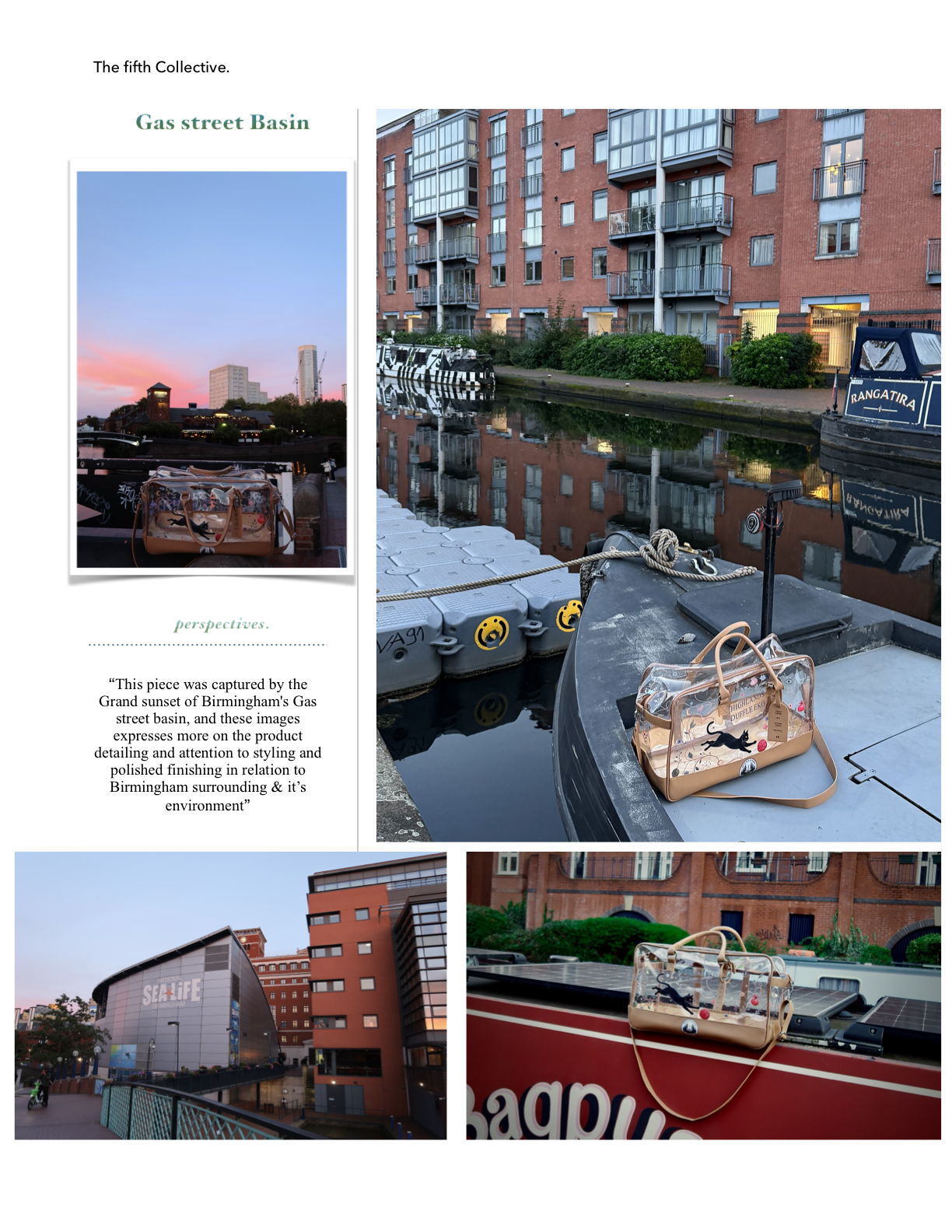
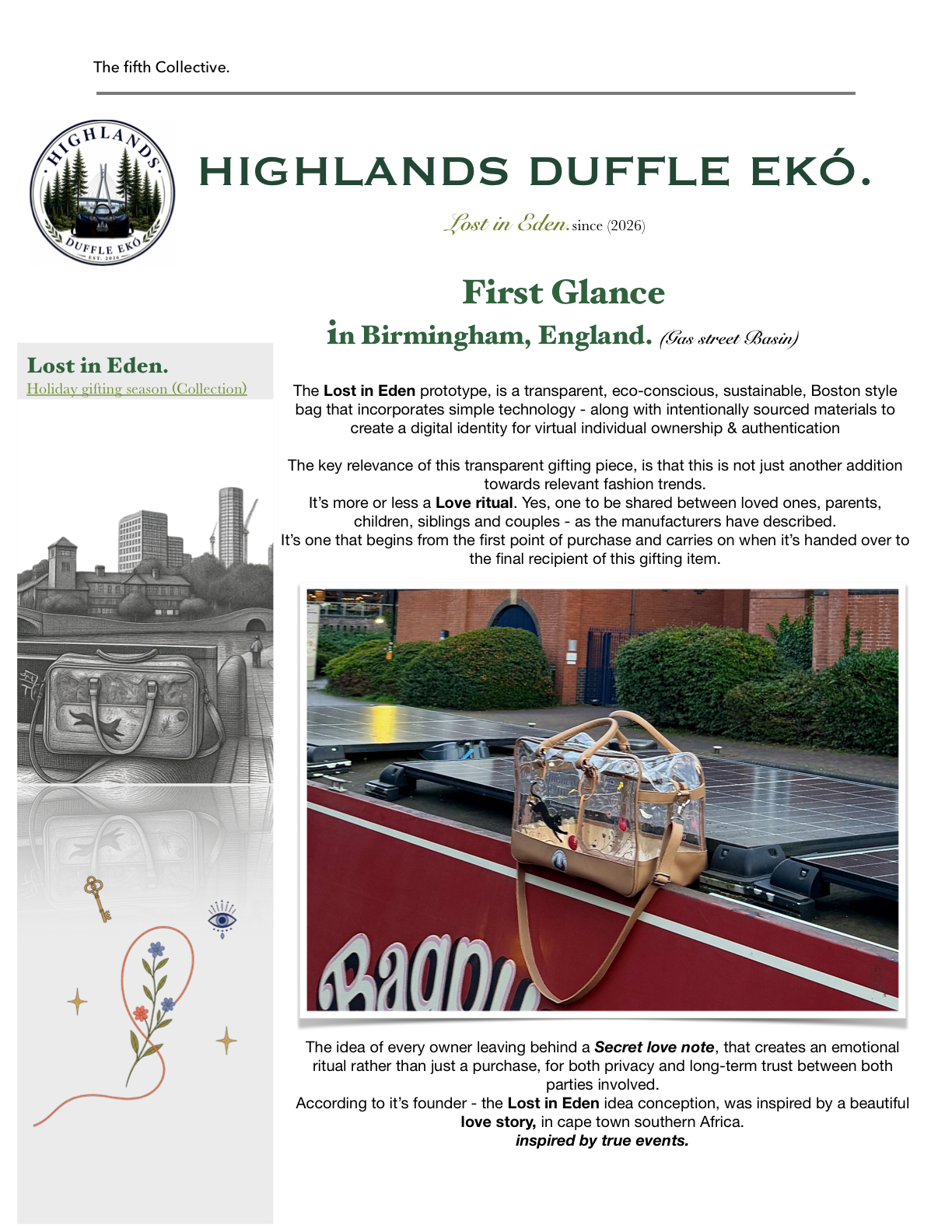
I began developing an eco-conscious duffle that could combine considered materials, accessible luxury and simple technology. The physical bag would serve a practical purpose, but its digital identity would preserve the intention behind its purchase and ownership.
That idea became Highlands Duffle Eko and its first collection, Lost in Eden.
Not simply purchased. Given with intention.
Lost in Eden was not created simply to be purchased and stored away. It was designed to be given.
From a parent to a child. From one friend to another. Between partners. From someone who cares to someone they never want to forget.
Each bag is intended to begin with an act of love, appreciation or trust. Through its digital experience, an owner can register a secret, memory or personal message connected to the bag.
The physical piece can travel, change hands and begin a new chapter, while the private identity of its previous owner remains protected.
This turns gifting into a ritual rather than a transaction.
The collection reflects the emotional journey behind it.
Life does not always unfold in a straight line. We lose things, rediscover ourselves and sometimes find purpose in experiences we did not initially understand.
Lost in Eden emerged from those emotional spaces—from creativity, work, loss, resilience, memory and becoming.
Its environmental purpose is equally intentional. Highlands Duffle Eko aims to support more conscious conversations around plastic use, product longevity and responsible end-of-life decisions within accessible luxury.
The vision is not to claim perfection. It is to make a considered contribution: to create something useful, emotionally valuable and designed with its future impact in mind.
We should be willing to give something back to the world from which we create—especially for the people who will inherit it after us.
Highlands Duffle Eko was therefore not founded on recycling and renewable thinking alone. It was founded on the belief that what we give, why we give it and how long its meaning survives all matter.